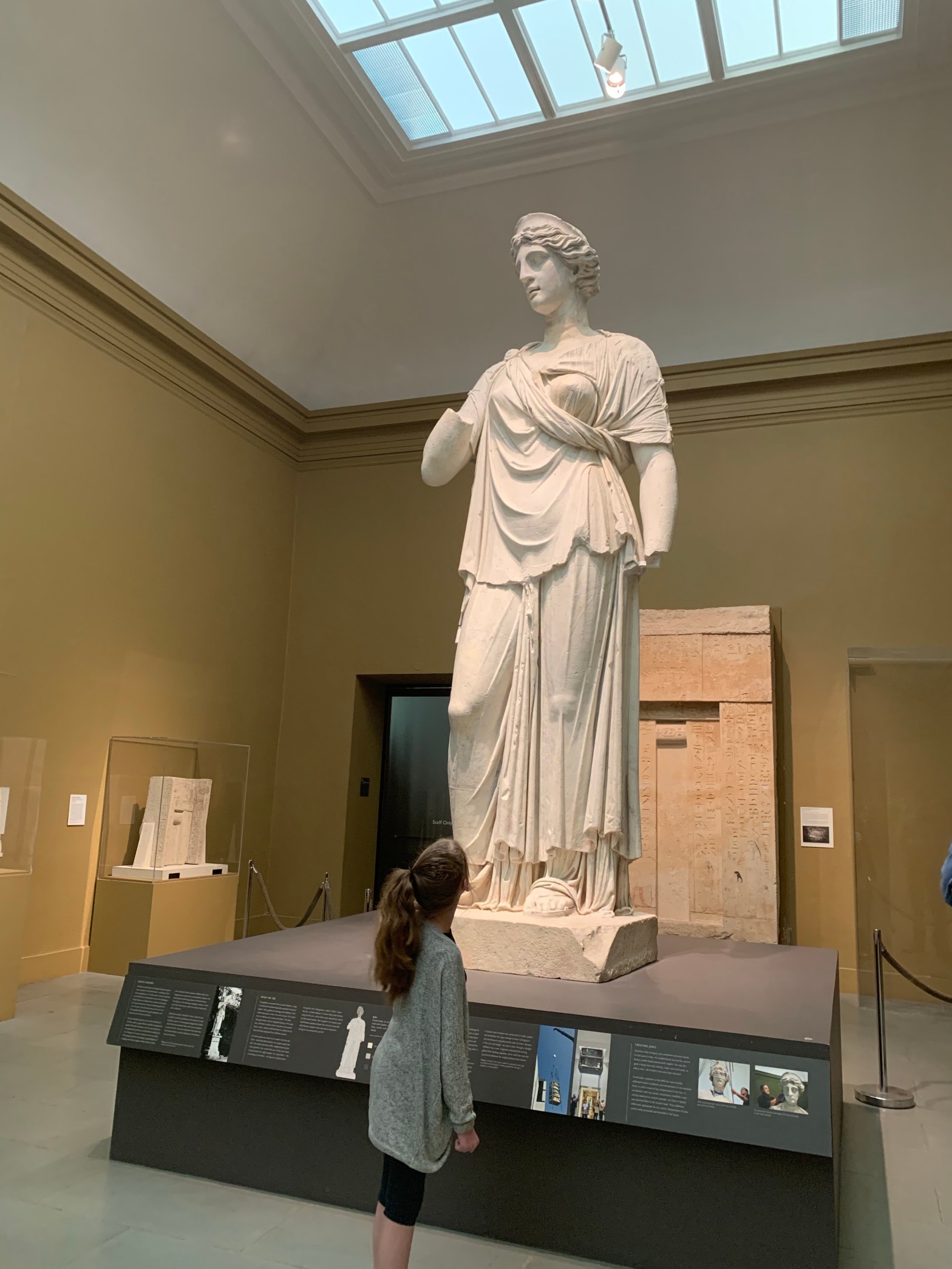
Juno is the Roman version of Hera as you can see she is a statue. FUN FACT: Juno is the biggest Roman statue in the USA. Juno was made in Italy. She is important because Hera is a goddess and this is one of the ways of worshipping her. FUN FACT: Hades or Pluto is the only god that wasn’t drawn in pictures because they thought it would attract him to them. I like this statue because I just do.
Hera’s role in mythology is queen and the jealous wife of Zeus the king. She killed or punished Zeus’s side chicks. Example: she in the disguise of a old woman made friends with the side chick and made her what to see what Zeus’s godly form looked like. The side chick died because she was mortal and couldn’t bear seeing his godliness. Or like Leto, Apollo and Artemis’s mom, Hera kept her alive but punished her to not be able to give birth on anywhere until Leto hid on Delos.
Victoria Reed told Juno’s history on Twitter. It is interesting. First Juno was in the Ludovisi gardens in Rome, Italy. The earliest record was 1633. Nobody knows how she got there. Then she was sold in 1897 to Mr. and Mrs. Charles Sprague. They brought her to Faulkner Farm in Brookline, Massachusetts on a cart pulled by 12 oxen. She had a lot of ghost stories tied to her there and was called “Gloria.” Then in 2011 she was sold to the MFA. They cut her head off first and then used a crane to airlift her in because she was too big to fit in the elevator. I learned that from this video: Juno on the Move.
They repaired a lot of things. They reattached the head after Henry XIIIing her. They cleaned the statue. They fixed the nose and the lips. They used modeling clay to make the new nose and lips onto a plaster version of the head. Then they used a mold to make the plaster nose and lips to put on the face. The pictures are on this website: Conservation in Action: Juno. I like the pictures because it looks cool. She looks like she has a coronavirus mask in one of them on this page.
The most surprising thing I learned about Juno from my research was that her head and body were from two different statues, Juno is one of my favorite sculptures in the MFA to visit I will be happy to see her again in her new gallery when it is opened. 😁
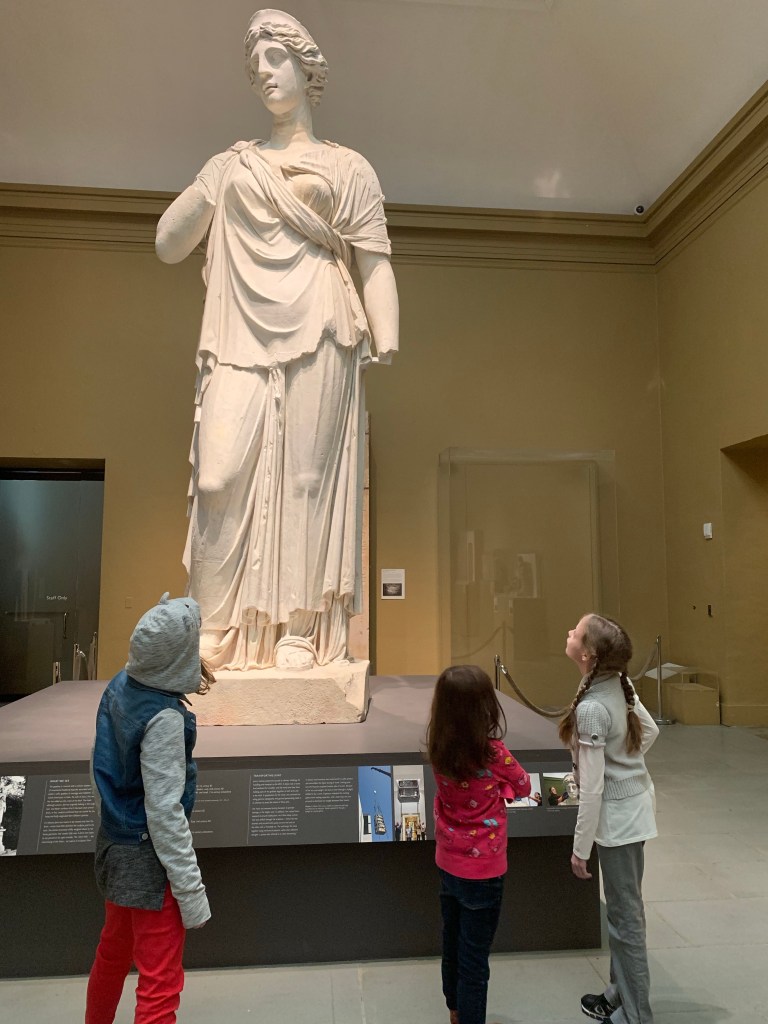
The Facts:
- Roman
- Head, Trajanic or Hadrianic Period, Body early Imperial period
- Late 1st B.C. or early 1st A.D.; Head 1st-2nd A.D.
- Material: Marble
- Museum purchase with funds donated anonymously (2011.75)
- Not currently on view due to renovations
 Museums with Mina